Role
Product designer
Industry
Fintech
Context
This is a use case explaining how we ideated and design and export tool capable of exporting any data in Fuell to most common ERPs.
The problem
As an expense management solution, Fuell operates between financial operations and accounting. This means we needed to develop a way to provide all the necessary information to our clients’ accounting tools.
Accounting
Expense management sits between financial operations and accounting. We needed a seamless way to export information into accounting programs so it could be processed correctly and without manual adjustments.
Current solution
When I joined the team, the export tool was very basic. It required significant manual work on the client’s side and was not ready for proper accounting integration.
Sales
This limitation was the main reason for closed lost deals among our target companies, SMEs with more than 200 employees.
The research
The product team conducted research from multiple angles.
We interviewed existing clients to better understand how their financial and accounting processes worked.
We learned the fundamentals of accounting, including the double entry method, journal entries, categories, and how accounting accounts are structured.
We created custom export files for both current and potential clients to better understand the technical requirements needed to build a scalable solution.
First outcomes
The most obvious solution was to build API integrations with ERP systems. However, there is no dominant ERP in Spain, unlike Portugal where Primavera is widely used. Since we had limited engineering resources, we needed to find a practical and scalable approach.
This research phase helped us clearly define the functional and technical requirements for the feature.
The requirements
Flexibility
Since there was no single dominant ERP in the market and we did not have the resources to build multiple native integrations, we needed to create a flexible system that could work with as many ERPs as possible.
Accounting
We needed to design an export flow specifically focused on accounting, rather than a generic export tool. This required including proper accounting information and preserving historical records to ensure accuracy and traceability.
Operations
Middle management was an important user persona for us. We needed to enable them to download data and generate reports easily, giving them autonomy and visibility into financial operations.
Our approach
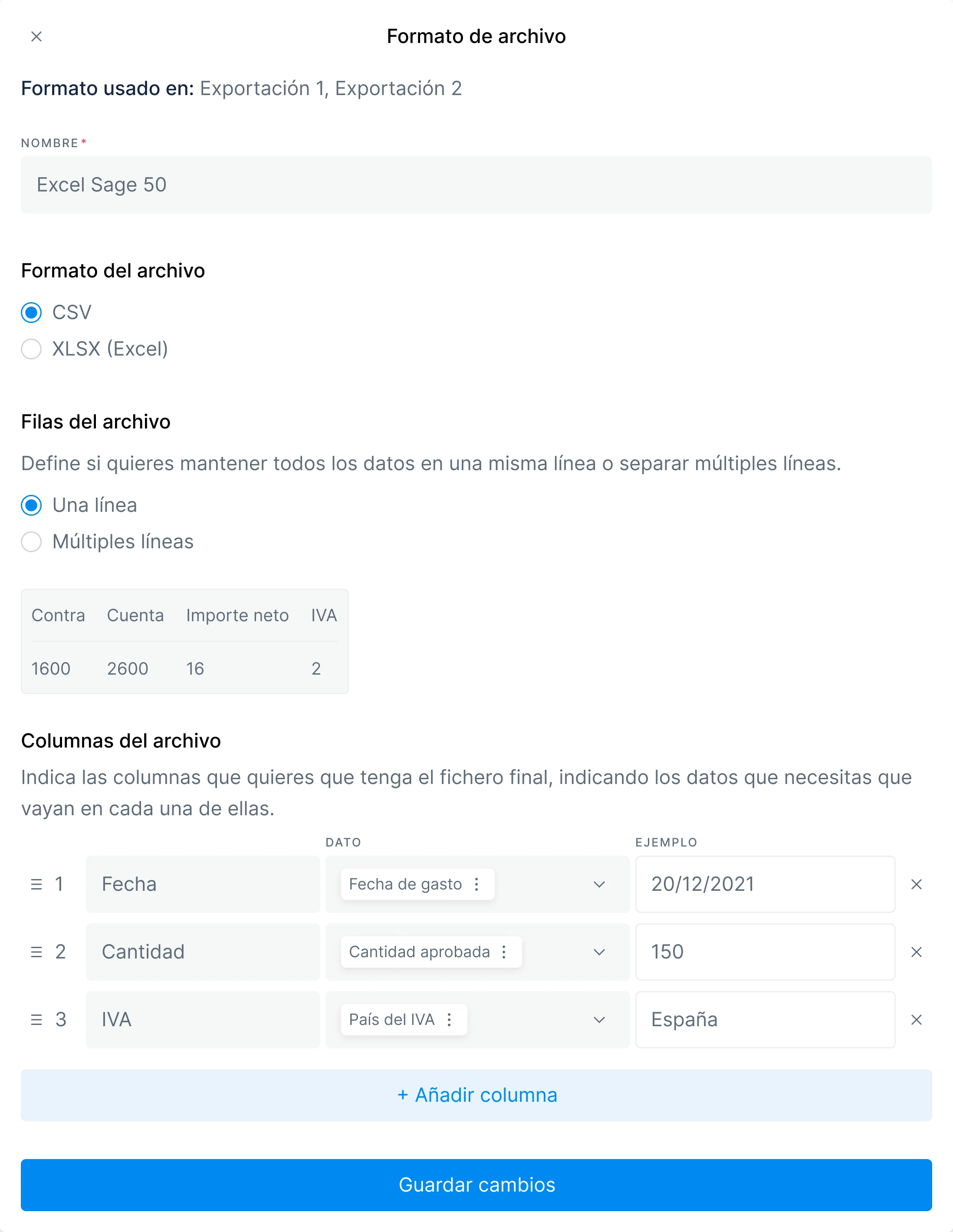
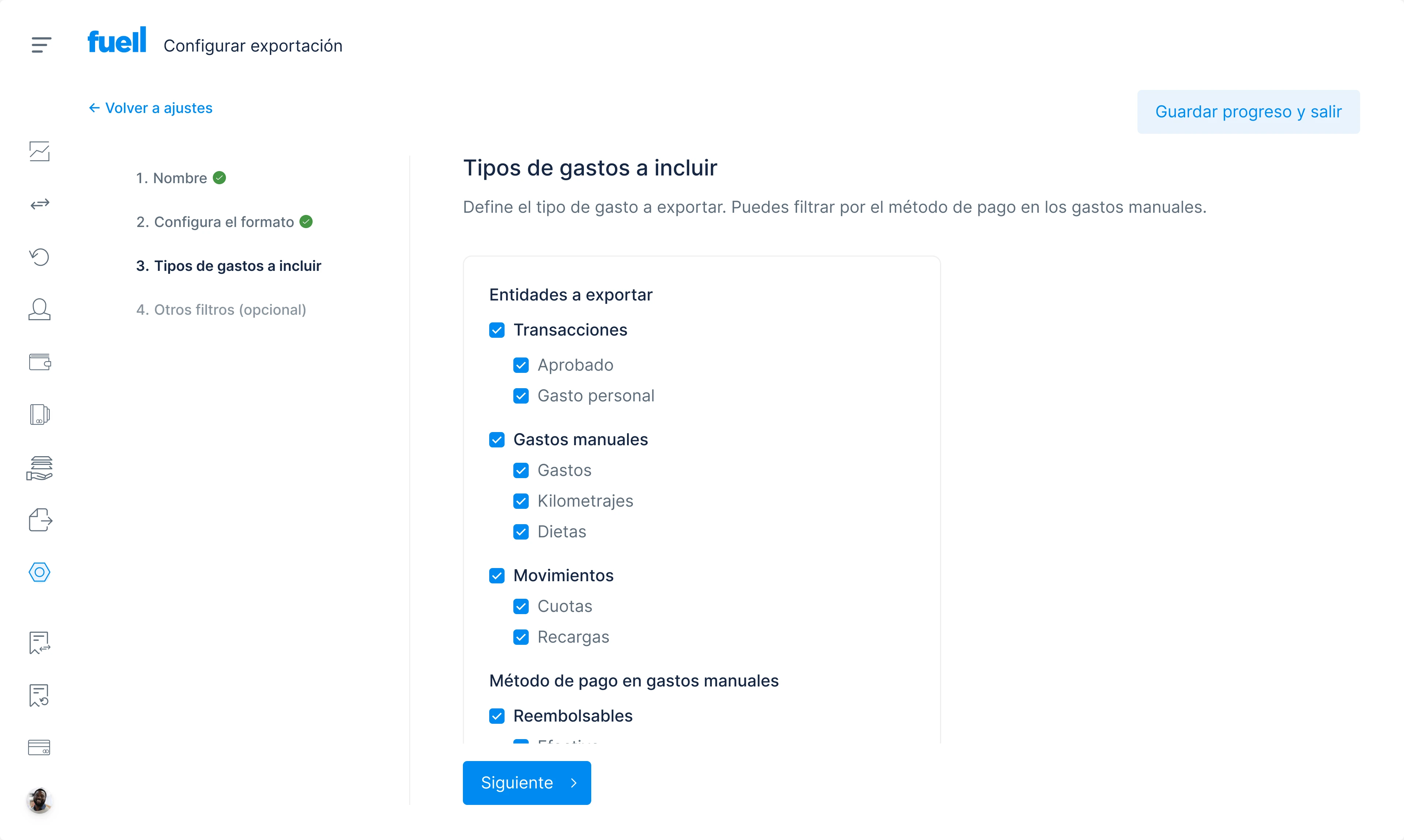
Custom file creator
We developed a custom file creator designed to be as flexible as possible.
Users could define the columns, set their order, and decide which data should be included in the file.
We also introduced accounting capabilities that allowed users to configure line structures aligned with the double entry system, ensuring compatibility with their accounting processes.
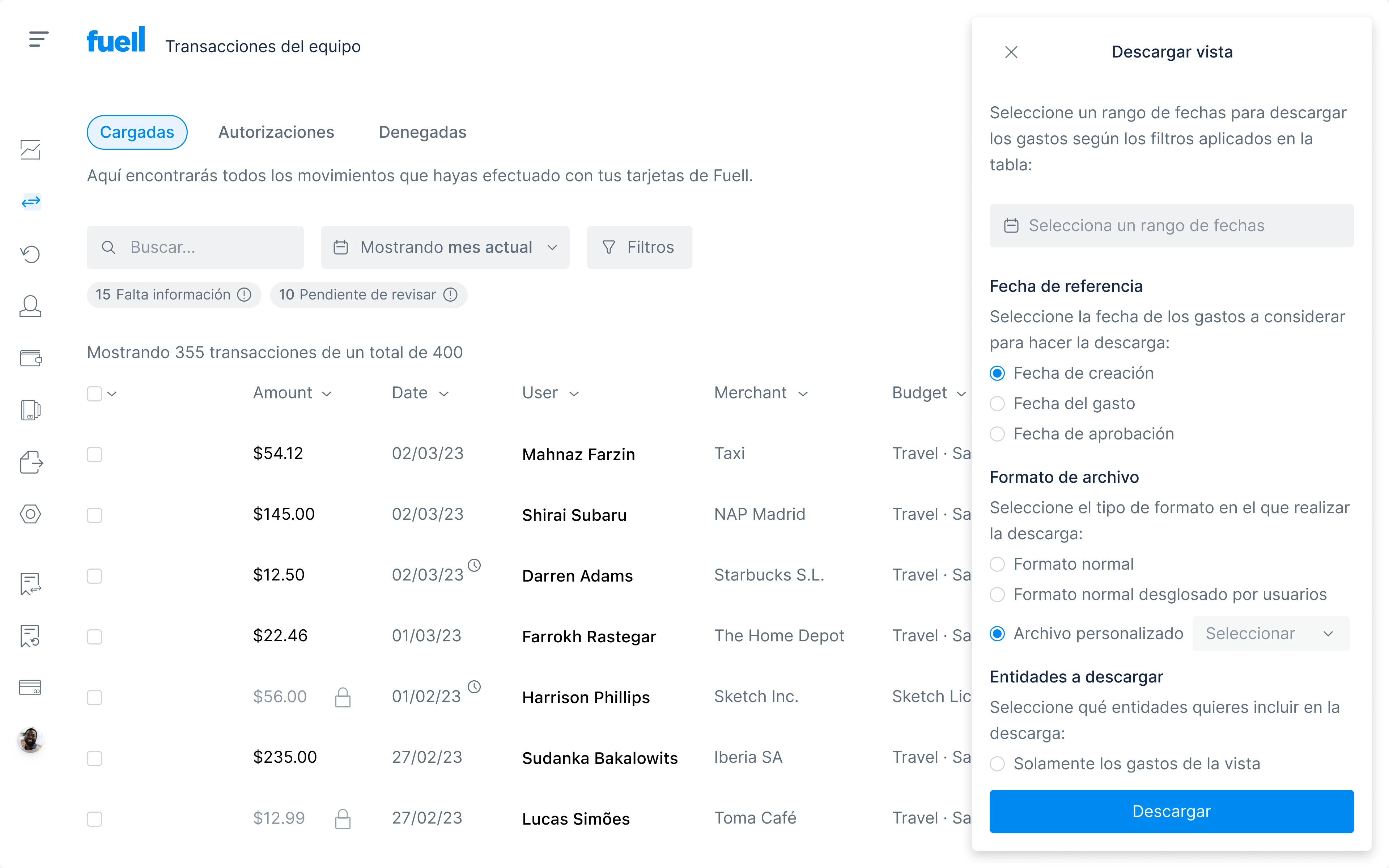
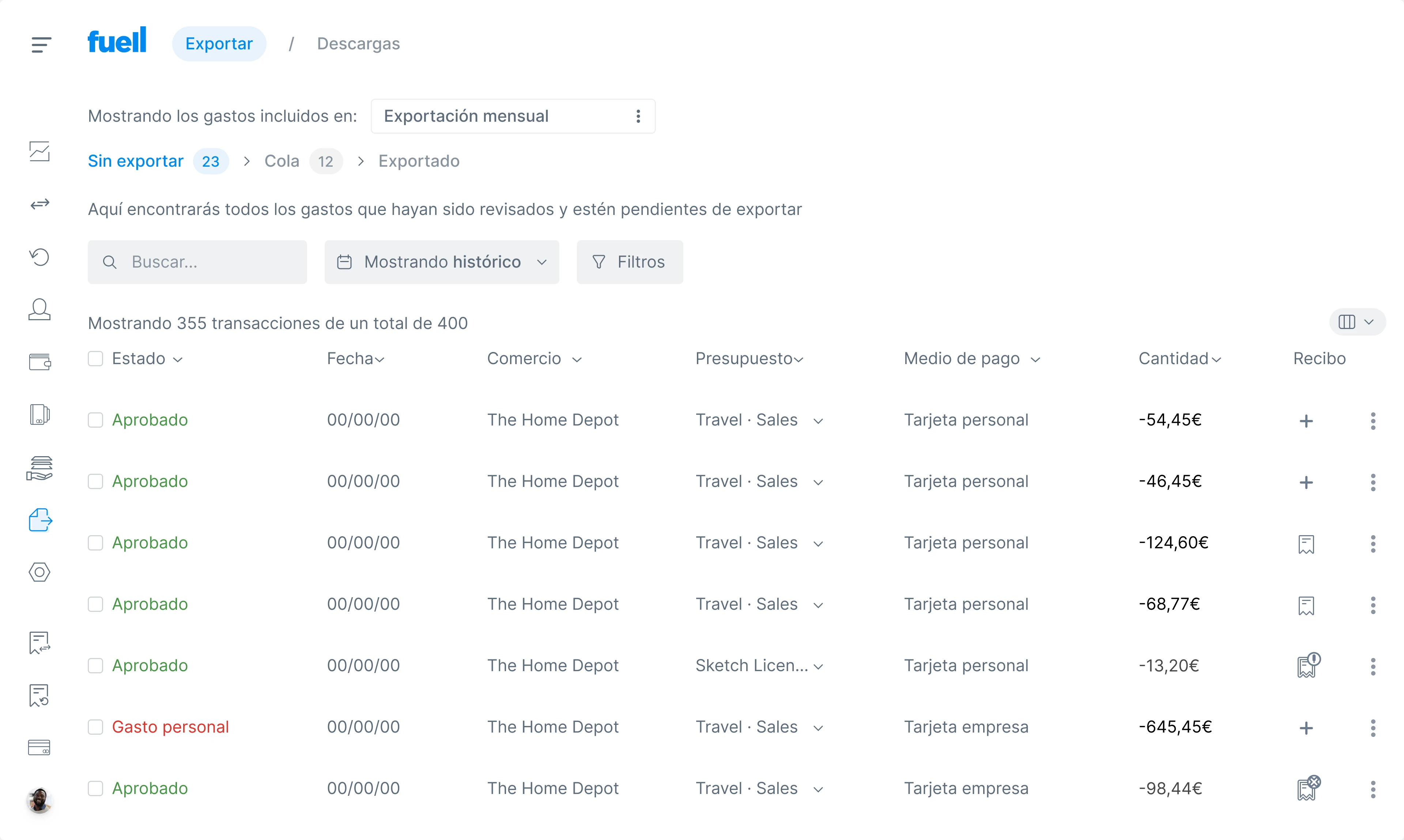
Download flow
Designed to support middle management operations. The goal was to facilitate data downloads so managers could generate reports easily and independently.
They were able to download any data from any table and choose the format that best suited their needs.
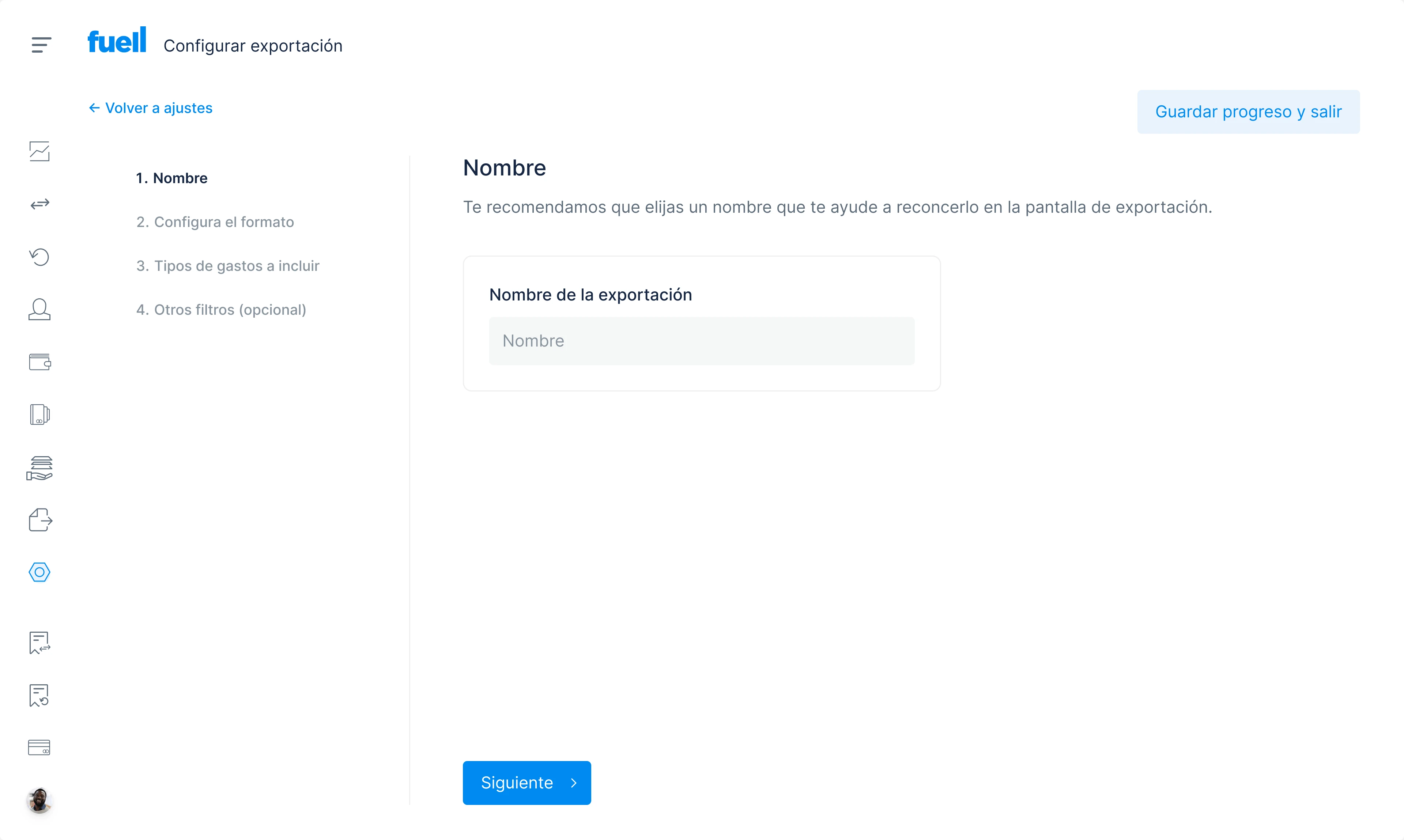
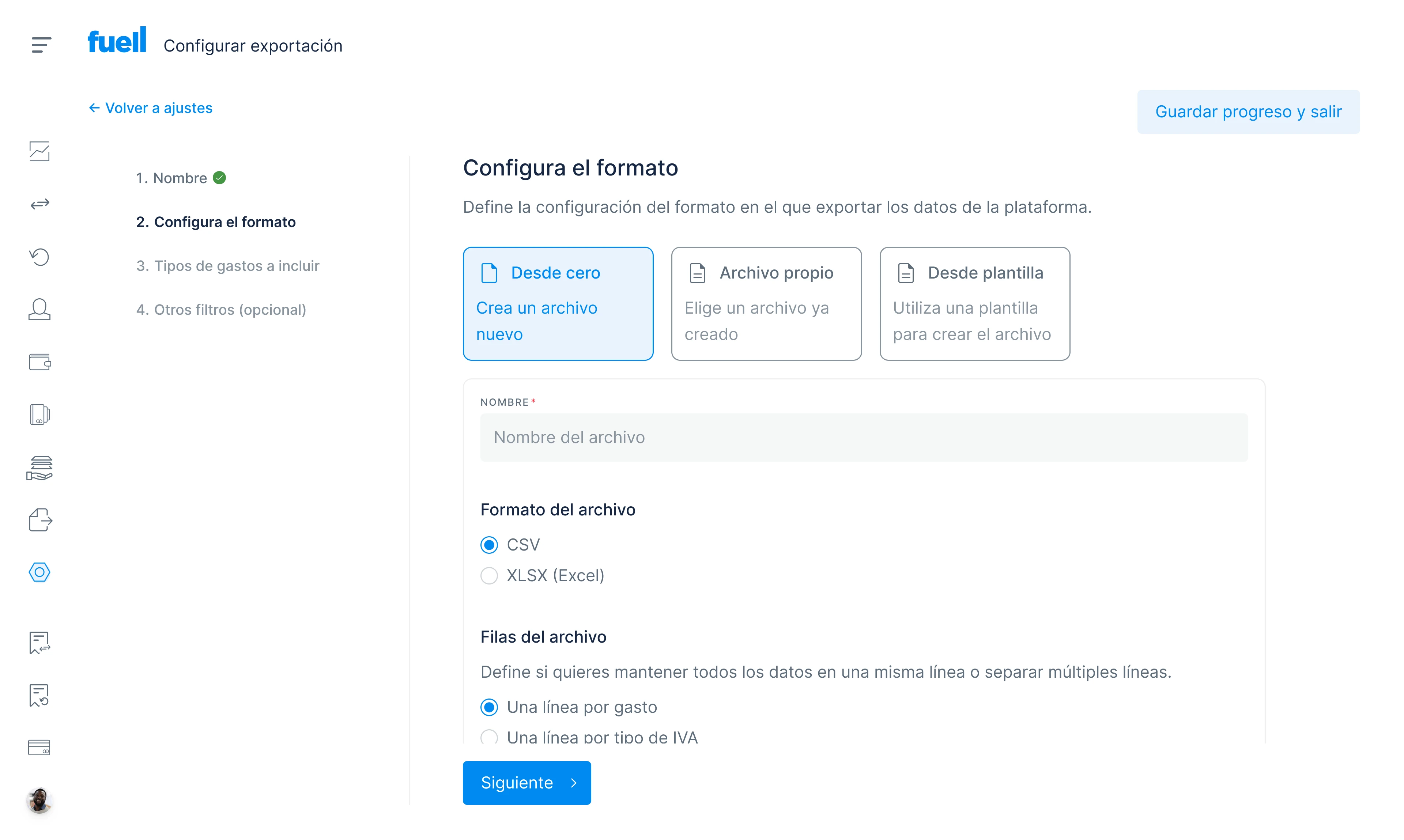
Accounting export tool
Designed to help finance teams operate more efficiently by gathering all the necessary information and exporting it directly to their ERP systems.
We enabled users to configure different export flows with built in memory, ensuring that information was not exported twice and reducing the risk of duplication.
We also prepared the user interface to support future direct integrations with ERP systems.
Final conclusions
For this initiative, we cannot say it was a major success. We were only able to deploy it to a small number of companies, as development was completed shortly before the company was acquired by Factorial.
Feedback | 20-30 early adopters
We received very positive feedback from our beta testers. They were able to successfully import the exported data into their ERP systems, including widely used solutions such as Sage, as well as less common ones.
Factorial
The months of research, development, and iteration invested in this project became the foundation for the new accounting features I later worked on at Factorial.